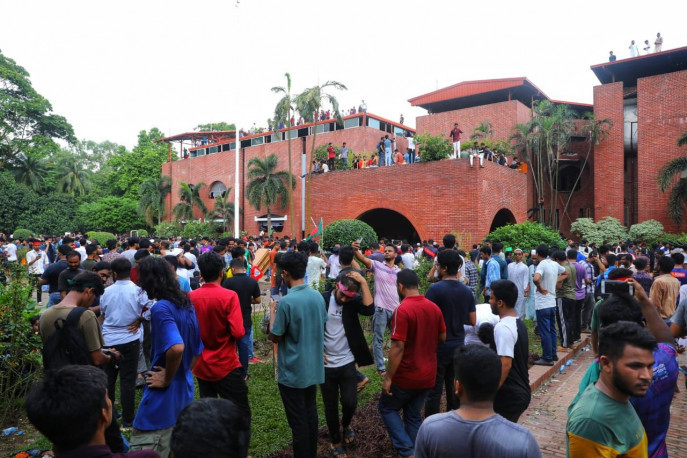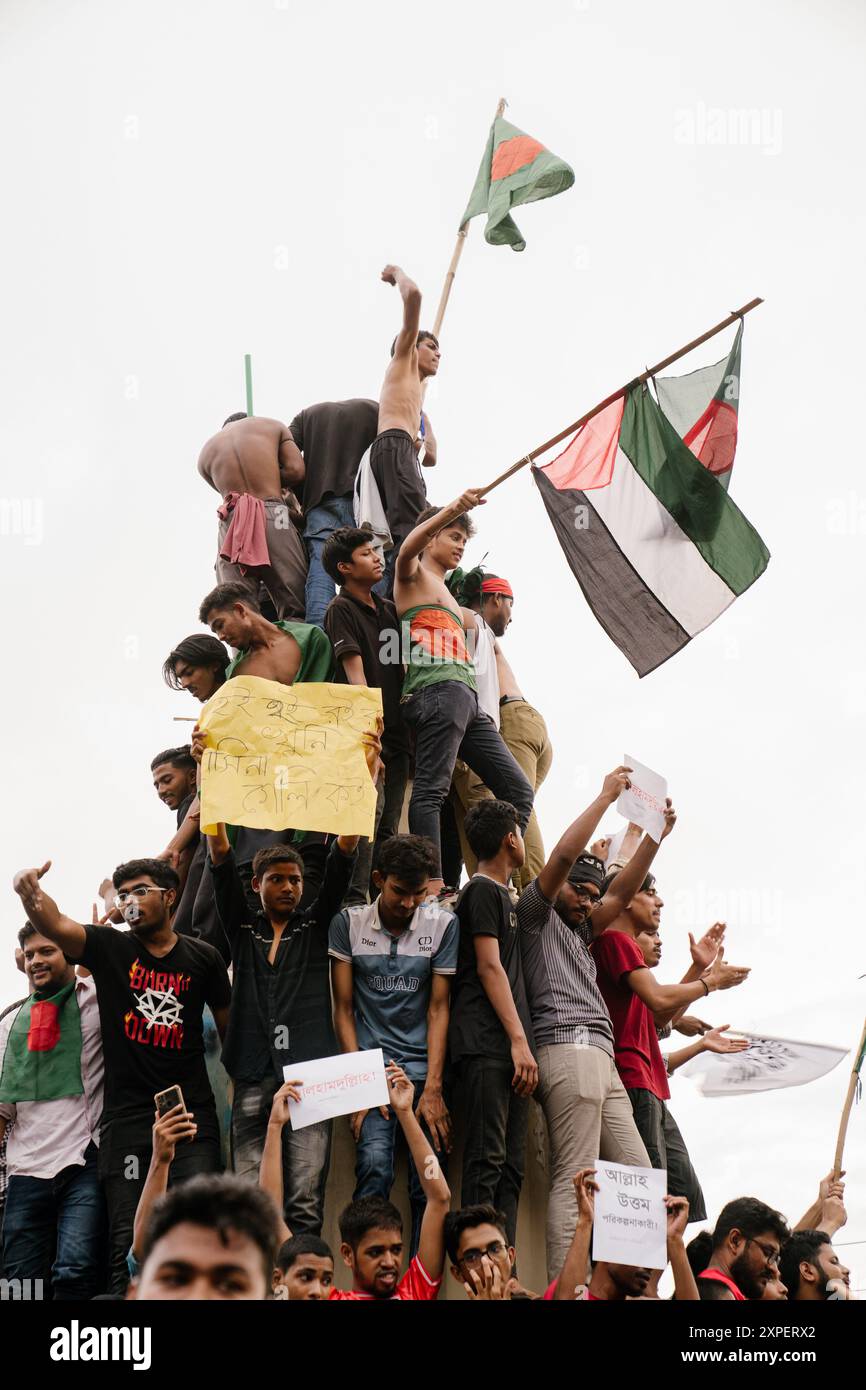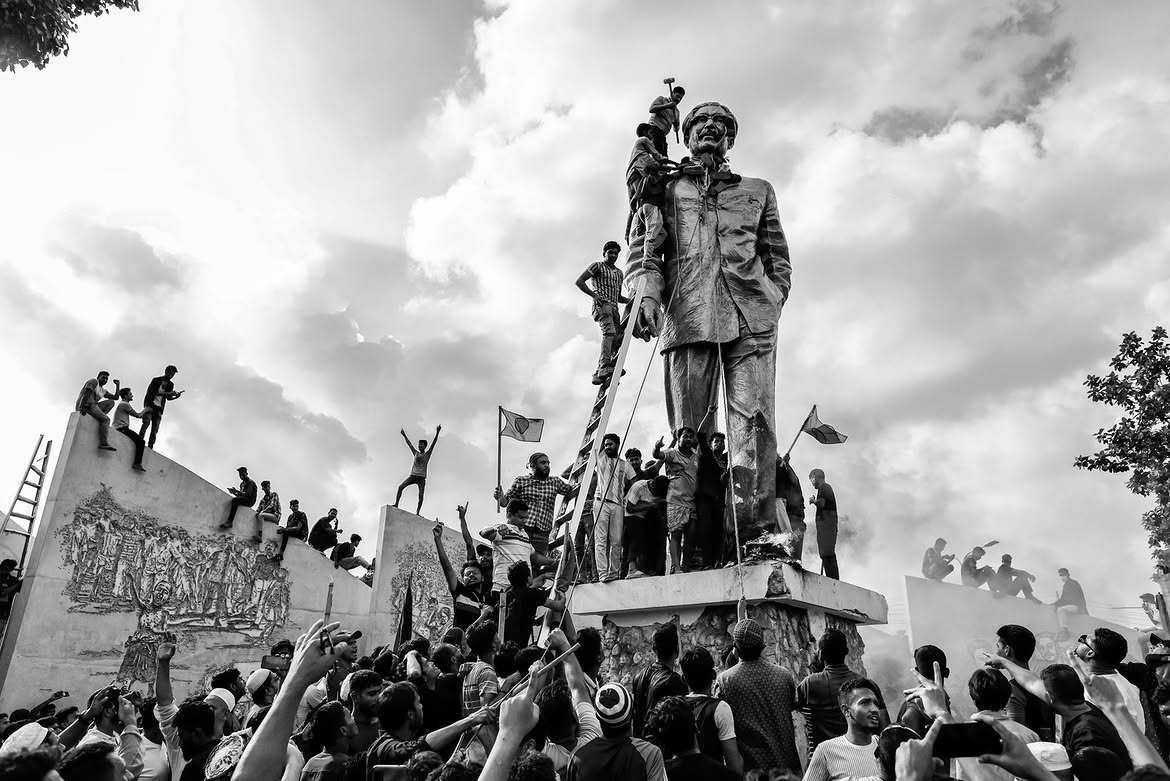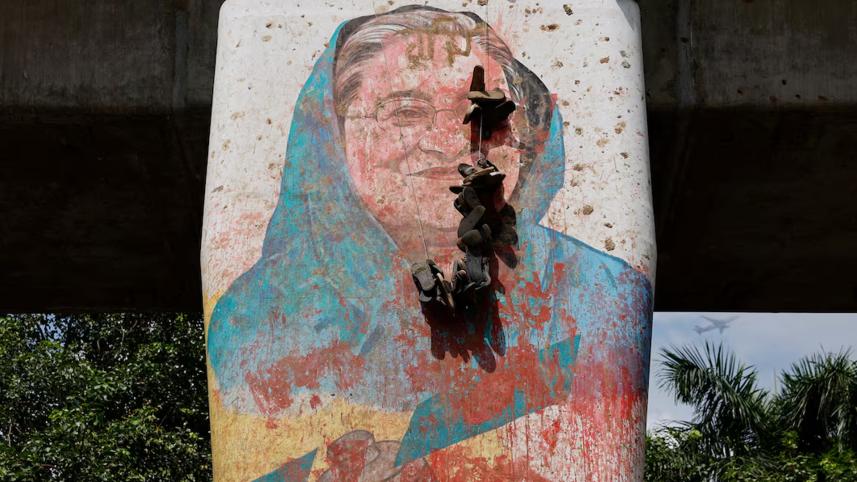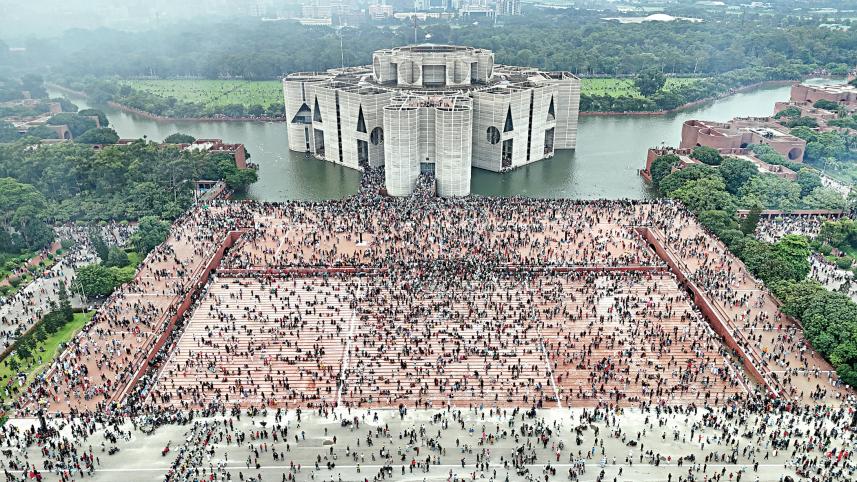
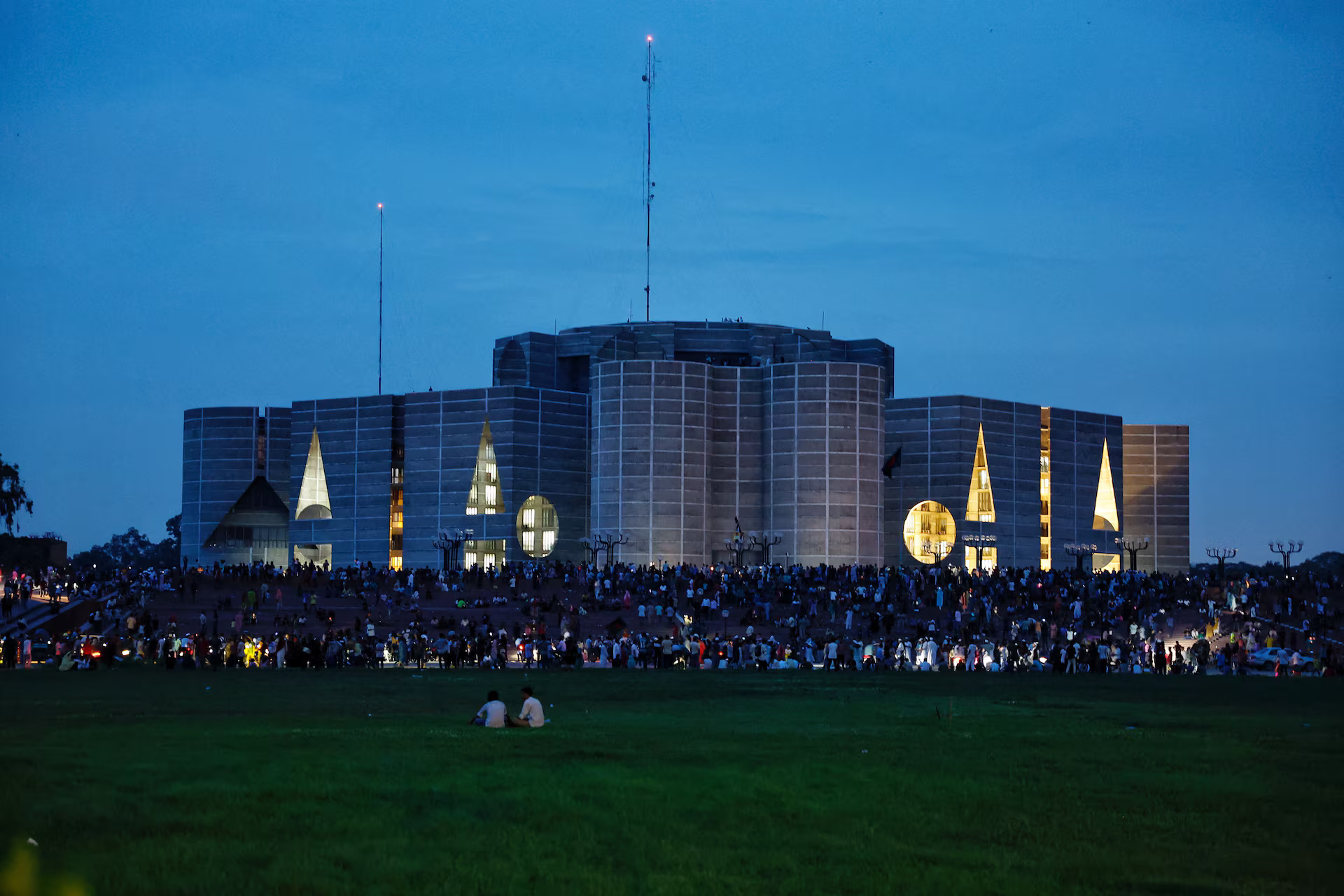
July 2024 was a monumental political episode in Bangladesh: it was sudden, tumultuous and to a great extent, unthinkable. Many of the media outlets founded after the uprising have called it a revolution. But the members from diverse and marginalized communities who spoke to us differ. The uprising did not usher in any structural changes beyond the fall of the Awami League government. Many different factions and communities participated with their own visions and agenda, but as a whole there was a lack of a coherent political vision. And the result was the subsequent competition for occupying the vacuum left by the fallen regime.
Jahan, who maintained contacts with other protesters and community members, shares how the bodies of the martyrs were buried quickly in the chaos of 5th August and after.
Jahan also thinks very little has been done to commemorate the martyrs of the uprising. Instead, the glorification of a few like Mugdho and Abu Sayeed has superseded many others who are lost from public memory.
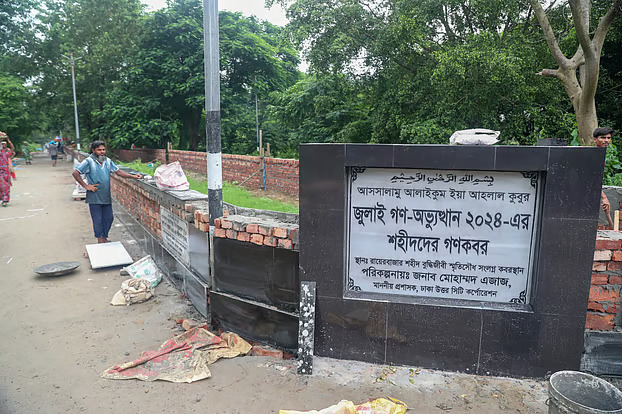
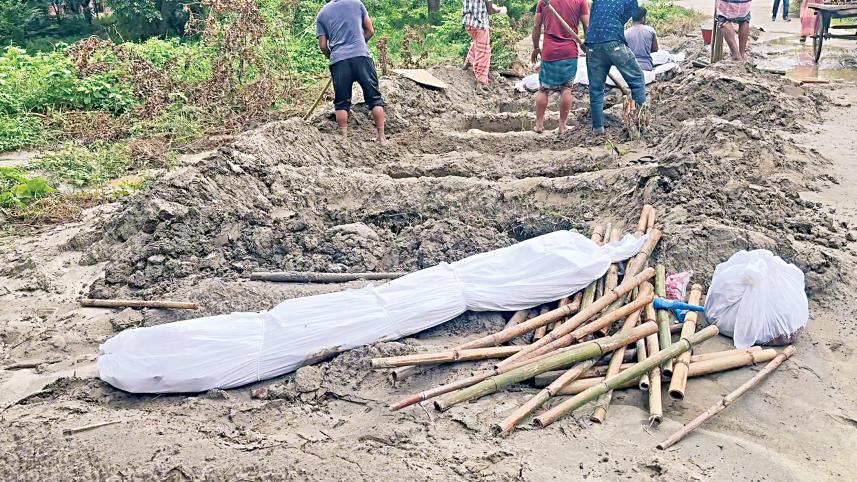
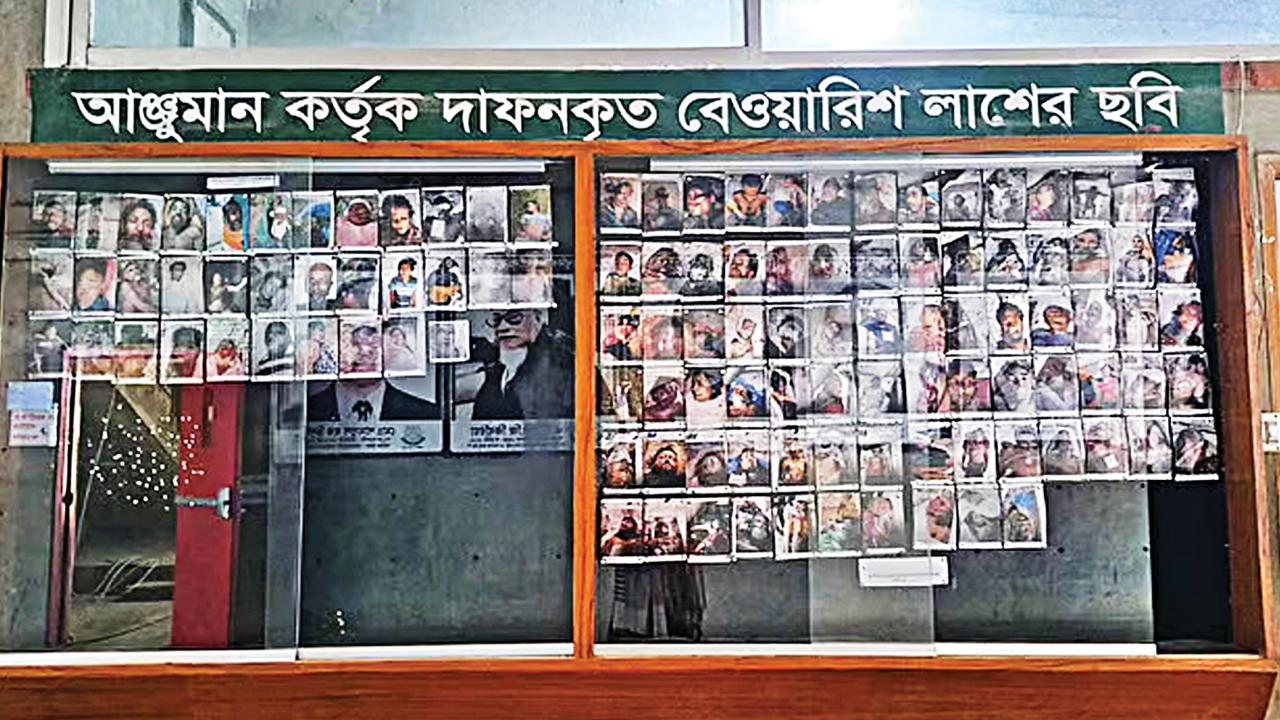
The ‘Wall of the Dead” at Anjuman Mufidul Islam. Among these 114 buried in unmarked graves in Rayerbazar in July-August 2024 are many victims of the July massacre.
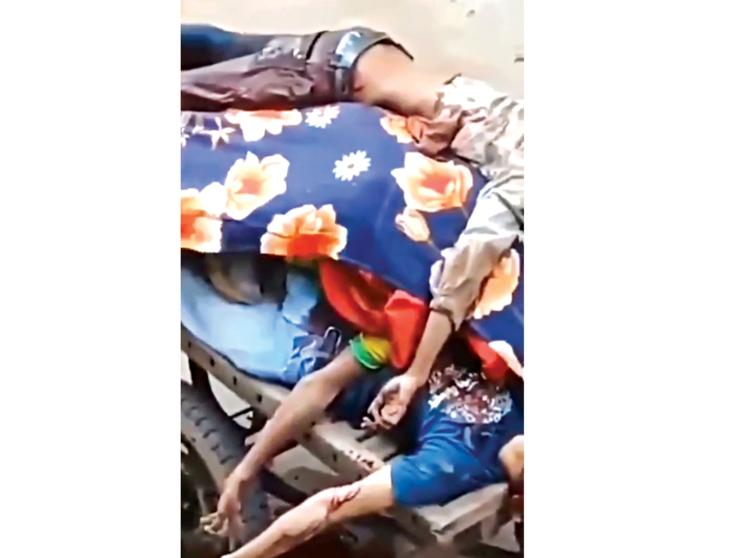
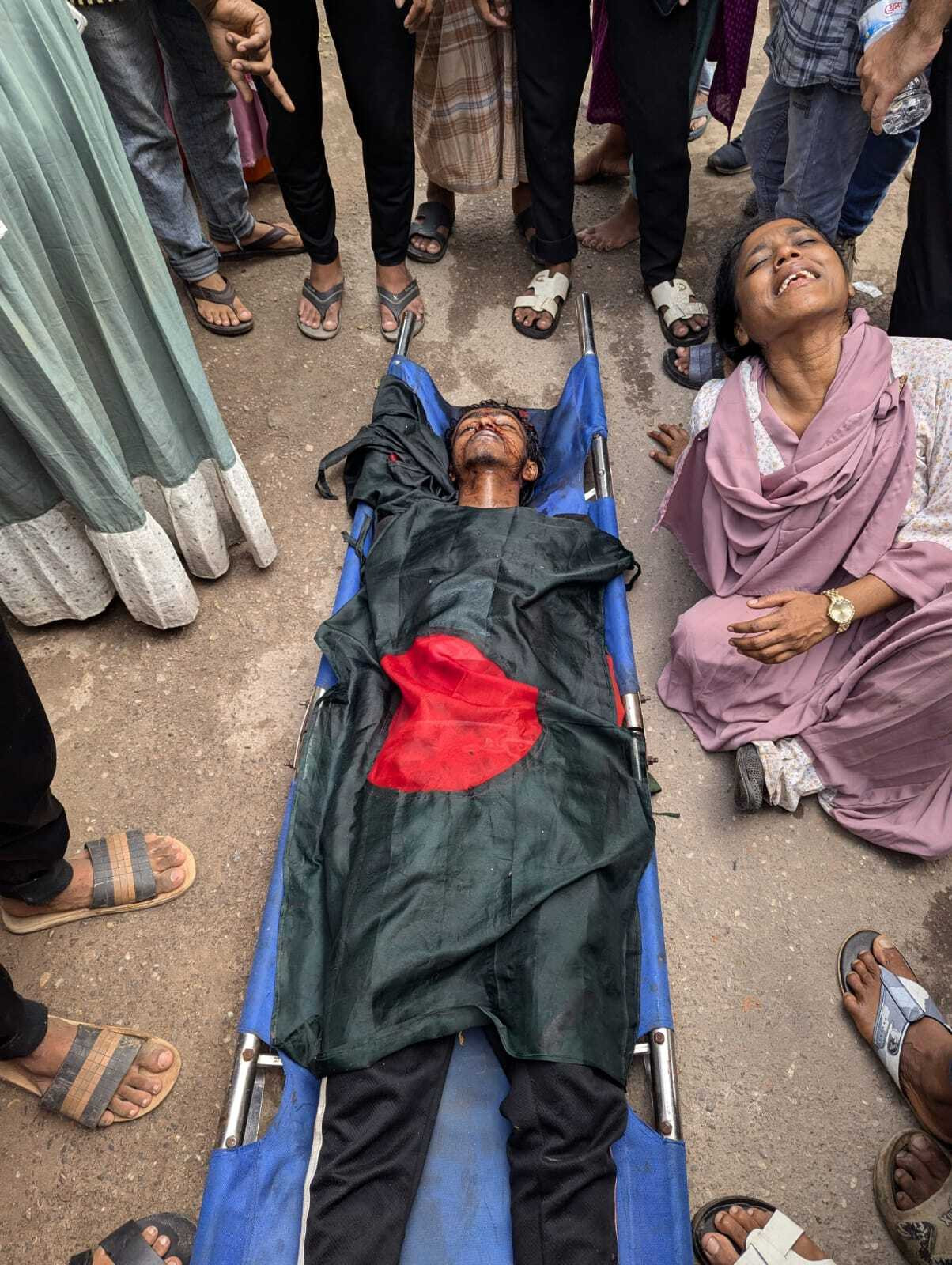
A bullet pierced the middle of Rabbi’s forehead and shattered the back of his skull as it exited
Both the interim and post-election periods have seen many political leaders making grand gestures about various ethnic and religious minority communities. However, these gestures were often laced with discriminatory and misinformed ideas of morality and sometimes violent exclusion.
At a rally in Kamalganj, Moulvibazar in January 2025, Sarjis Alam, the then Chief Organizer of the Jatiya Nagorik Party, exclaimed that all liquor shops around the tea estates be destroyed while making bold remarks about how all National Tea Company estates should be reopened and that their fair wages, education, health care, housing and employment should be ensured. What the liquor stores have anything to do with their livelihood was unclear.
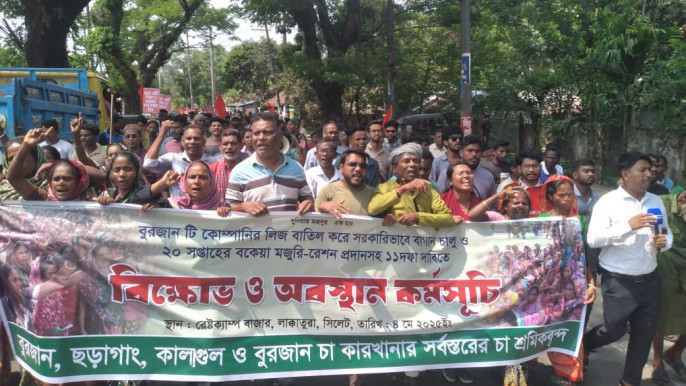
Tea garden workers’ demands for better wages continue to echo in the tea estate areas more than a year since the rally.
Vicious attacks on Ahmadiyya Muslim Community in Bangladesh
In a more alarming event, on 15 November 2025, in Dhaka, during the “International Khatm-e-Nubuwwat Grand Conference,” attended by BNP, Jamaat‑e-Islami, Islami Andolan Bangladesh, Khelafat Majlis, Bangladesh Khelafat Majlish, Bangladesh Khelafat Andolon, Bangladesh Nezam-e-Islam Party, Jatiya Ganotantrik Party (JAGPA), and Bangladesh Development Party demanding that the Ahmadiyya community (also referred to as Qadiyanis) be officially declared non-Muslim by the state.
Post-July periods have seen several attacks on Ahmadiya communities in various parts of the country including attacks on Ahmadnagar Ahmadiya Mosque, Jamia and Jalsa Gah and about 70 houses of Ahmadiyas on 5th August 2025. The central store of the Jalsa Gah was burnt, the wall of Jamia and mosque was destroyed and set on fire. 18 Ahmadiyas were injured including students of Jamia.
Within 16 days of the end of the uprising, The Bangladesh Hindu Buddhist Christian Unity Council documented 2,010 incidents of attacks on religious minorities. 69 places of worship and temples were targeted, vandalized, or set ablaze during this 16-day period and at least 157 homes were looted, vandalized, or destroyed.
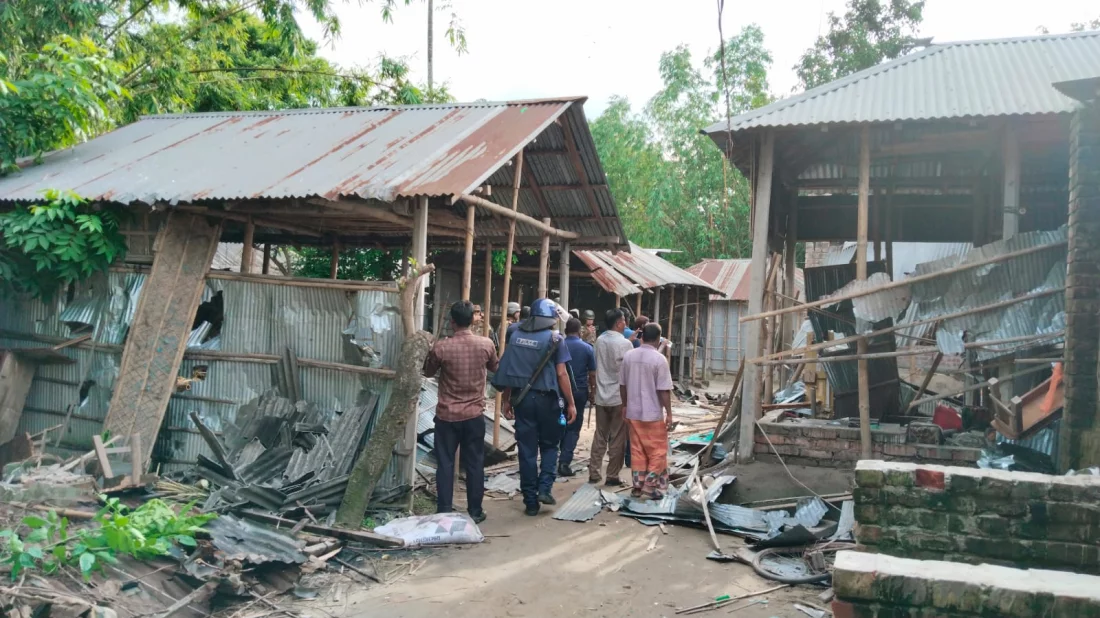
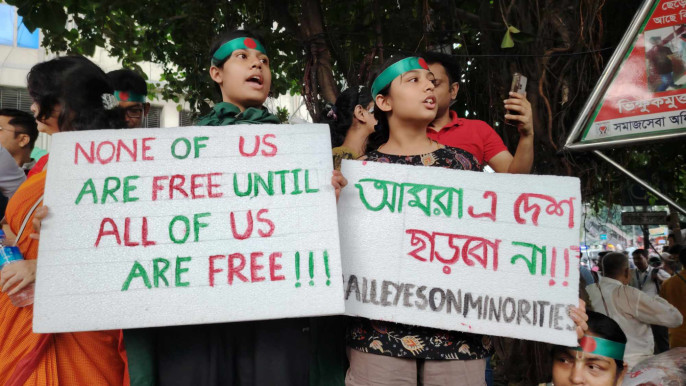
While many gatherings, human chains and press releases have urged for a stop to these violent attacks, the interim period 2024-2025 has seen attacks on all minoritized communities and posed threats to the safety of many vulnerable families.
While many of our interviewees have shared disappointment about the post-uprising political developments, Jahan thinks that the one true aspiration of the uprising had been fulfilled
Ishan mentioned that they did not imagine the ousting of Hasina or the fall of the Awami League would happen in his lifetime.