
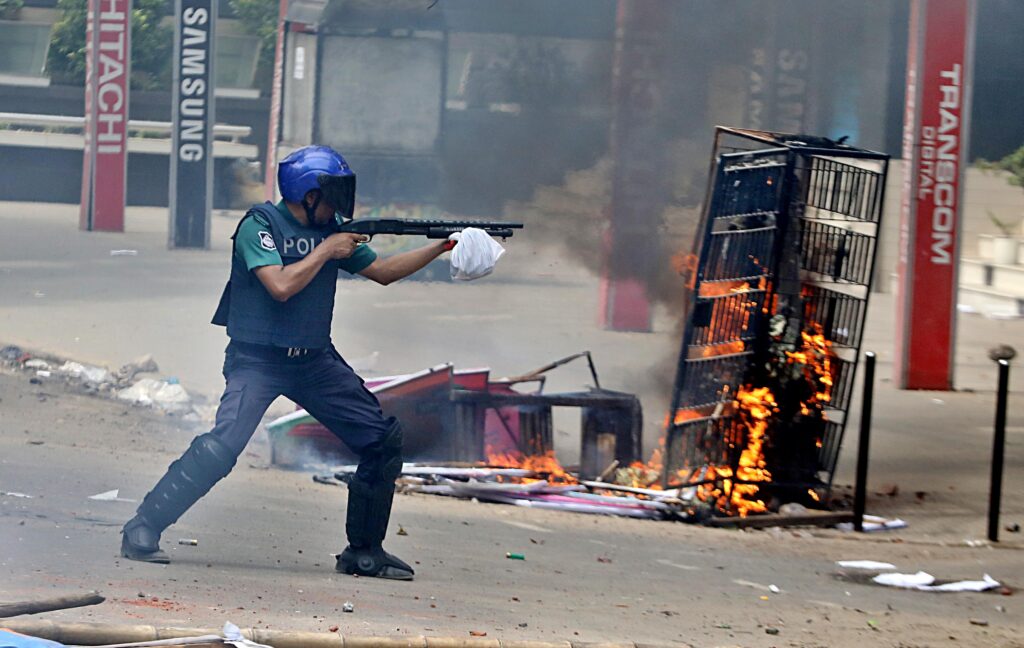
Indigenous and queer peoples’ rights remain pivotal in Bangladesh’s social and political realities. In the aftermath of the uprising, several incidents marked a sharp rise in attacks and threats against indigenous and queer communities.
And as with any movement here, queer and indigenous participation in the July uprising went unnoticed. Many students, activists and protesters from these marginalized communities joined the movement with hope for a change of regime. In our interviews, we tried to document their roles in the uprising and their understanding of this massive movement that shook Bangladesh in 2024.
One participant, Sumon described the garment workers’ protest he joined and noticed how their participation was not honored by the media.
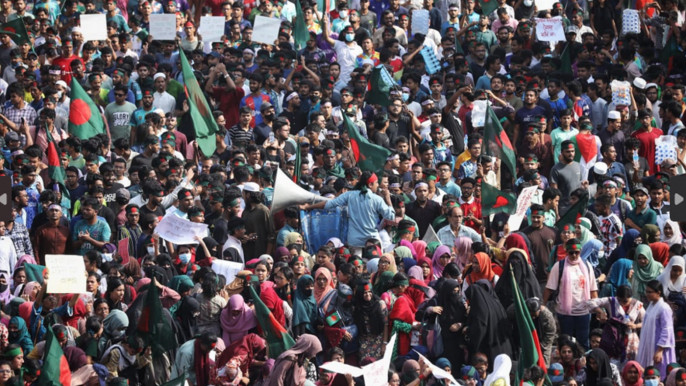
Anti-quota students from Dhaka University blocked Shahbagh intersection, waving national flags and chanting slogans on 7 July (Sunday), demanding the abolition of the quota system in government jobs. Photo: Rajib Dhar/TBS
Another interviewee, Ishan (pseudonym) mentions the significance of participating in the movement as a queer person.
Ishan, who took part in various protests in the July movement despite transphobic encounters, told us that congregations in Dhaka University and Jahangirnagar University was a major point of motivation for him. The attack on students was a tipping point and as a result he joined the mass mobilization on those campuses.
Coordinated by left and progressive leaning platforms, Droho Jatra was a gathering of protesters from all walks of life. The protesters marched from the National Press Club to Shaheed Minar at Dhaka University on 2nd August. They demanded resignations, an end to mass arrests, trials for the killings, the release of detained students and protesters, an end to the curfews, and resumption of regular attendance at educational institutions.
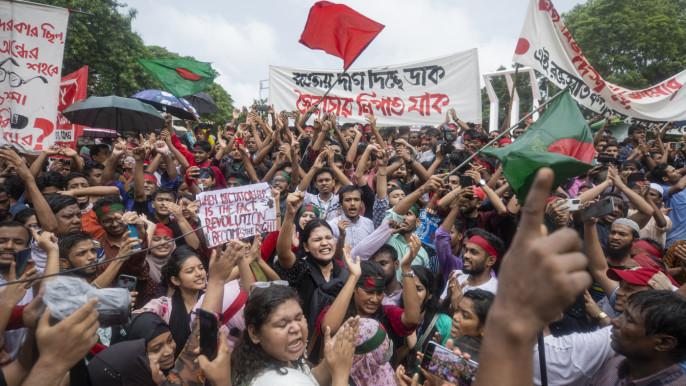
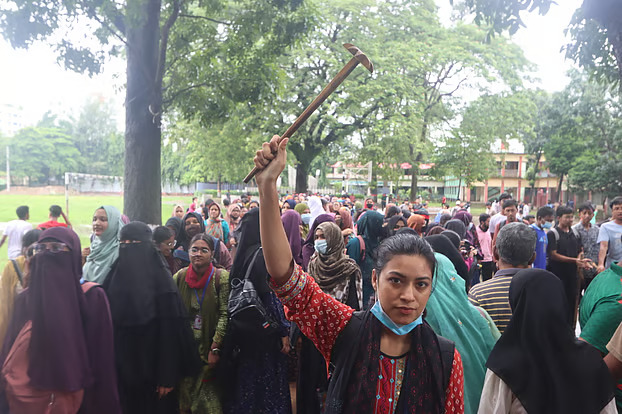
Ishan expressed fears of being raped as a trans man during the protests but he recalls, that many queer people like him were determined to stay on the streets to take a stand against the massacre. He also noted that he was given access to many of these spaces where protesters were organizing because he was a man.
On 3rd August, protesters declared a nationwide Total Non-Cooperation Movement and their one point demand for Sheikh Hasina’s resignation. Mass killings were ongoing in the campuses and pockets of protesters ongoing in the campuses and across the country.
On 4th August, protesters carried the bodies of those killed to Shaheed Minar at Dhaka University, continuing their one point demand.
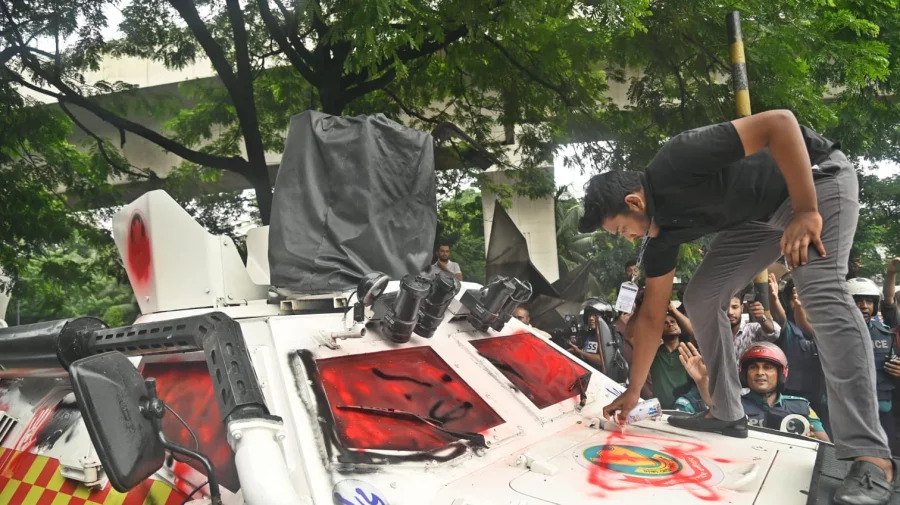
A voice clip from Jahan (pseudonym) from Shanir Akhra who only had one demand: the fall of the authoritarian head of the state.
Ishan echoes here that many of his friends and allies reached out to tell him that the uprising could bring Jamaat to power and that they would lose the liberal support shown by the Awami League towards queer and other minoritised groups, but at the time it did not make sense to him. It was not okay for a fascist government to go about in the most violent ways. And by the time the chaos escalated, people from many walks of life had joined and it meant that through this movement it was possible to reimagine and create many more societies.
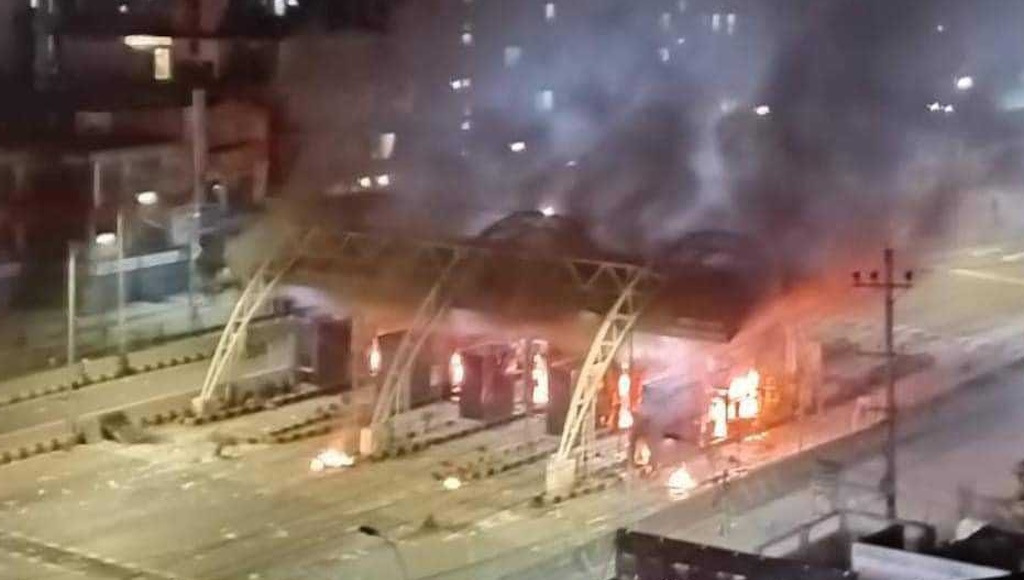
Jahan recalled the day mobile data was slowed down and the situation had already gravely escalated in several areas of Dhaka. Hanif Flyover toll plaza at Jatrabari was set on fire on 17th July by the protesters. In the following days of the uprising, several areas saw road blocks and clashes near and in Jatrabari.
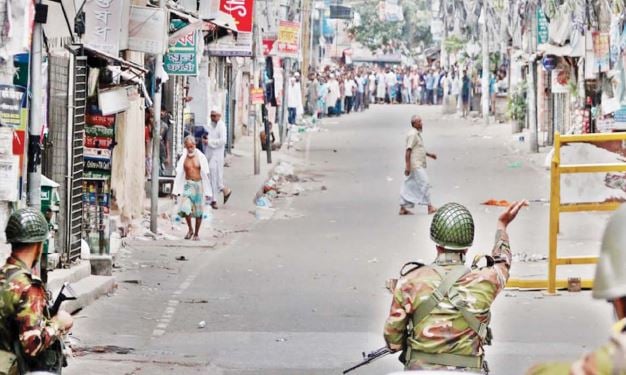
After Jummah prayers on Friday, 19th July, clashes between the police and the protesters erupted at the Chashara intersection and men from Bangladesh Chhatra League (BCL) with weapons joined the clashes. Soon after a significant number of protesters were forced to retreat. Jahan remembers the internet to be fully shut down that same day and initially thought it was unavailable only in Jatrabari. VPNs could be used to access the internet but at very low speed.
Between 19th and 24th July, Jahan could not leave the Jatrabari area. On the 19th, army officers were deployed and blockades were set up at major roads. That day at least 66 protesters were killed amidst clashes with the police. A crowd of angry protesters stormed the jail in central Narshingdi and freed nearly 900 inmates alongside looting 80 firearms and more than 1,000 rounds of ammunition. On the first day of the curfew on 20th July, another 21 protesters died while leaders of the then opposition party, BNP, were detained.
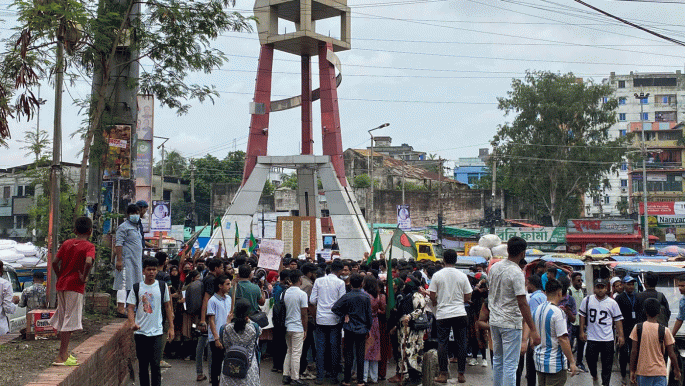
When the movement was being heavily policed to create terror, Jahan found his motivation to join and amp up the resistance.
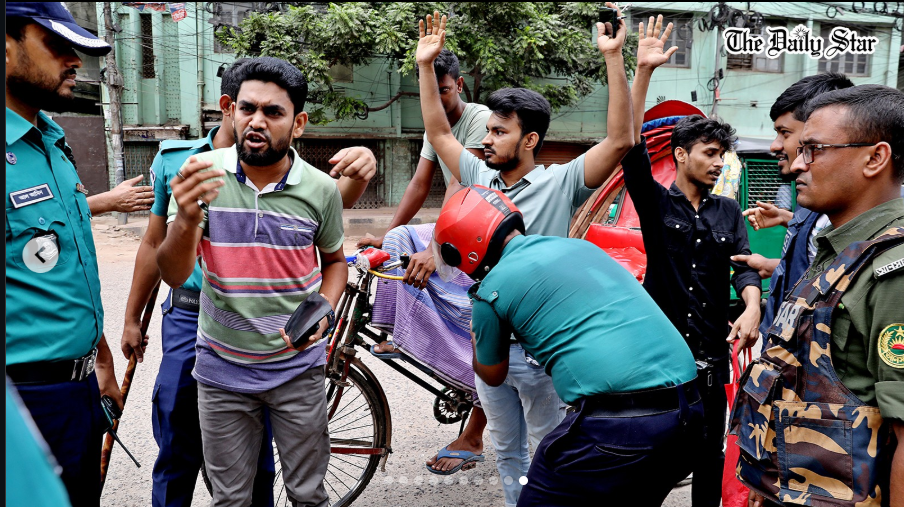
Jahan expresses that this uprising lacked a particular vision; strategies to collectivize was not planned but when it unfolded, it opened doors to imagine many political possibilities after the fall of an authoritarian government. They have observed that various political blocks that existed during the AL regime and continued to operate after the uprising found new motivations to be engaged politically. The uprising made ways for these political factions to function again.
Similar to Jahan’s observations, Ishan points out that this uprising, that escalated rapidly into a country wide movement, quickly politicized a large number of youth who were ready to take to the streets everyday. That momentum which gathered responses across different classes and identities was absurdly powerful to Ishan.
On 16th July, Ishan was at a private university campus where he teaches with colleagues to intervene in what became some serious clashes between BCL and the students. As a faculty member he was concerned whether or not he would be answerable to the university authority for showing up for his students. A quote by him clarifies this further, “These private universities have a history of expelling students who are too ‘political’ and hold the mindset that the ideal teacher will not be involved in politics.” Ishan’s other colleagues from various departments came together to express solidarity despite restrictions from the institutions and plans were being made anonymously to operate under a single banner of faculty members. Some members from several private institutions were also reporting to campus newspapers about faculty members at Ishan’s university taking a united stand.This made the process of keeping students safe difficult.
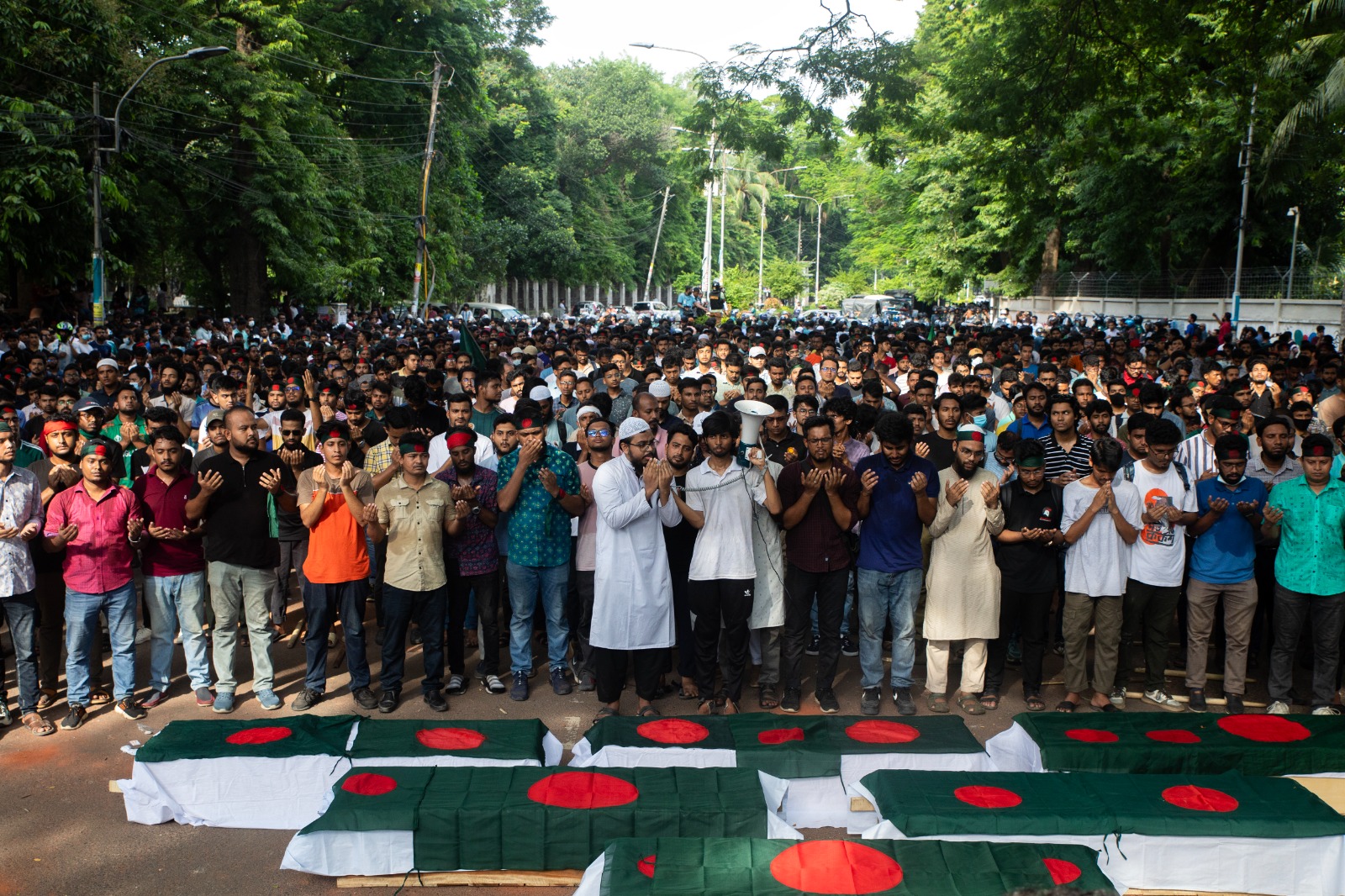
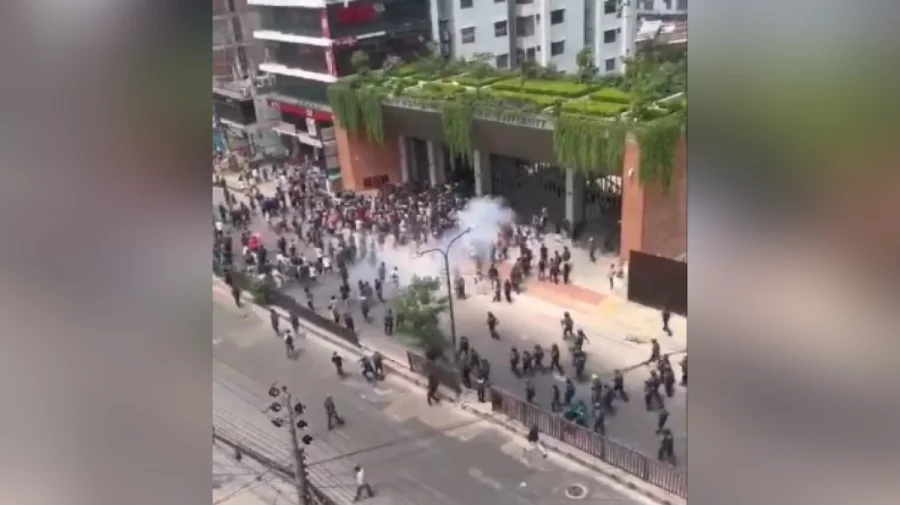
Jahan notes mass mobilization of private and public university students from Jatrabari on 2nd and 3rd August. On 4th August, March to Dhaka was announced. Due to internet slowdown on that day, Jahan was not sure if a crowd was building up on 5th August, but when they arrived at a big main road in the Jatrabari area, the number of people gathering and entering Dhaka was shocking.
Jahan shares more about the situation in Jatrabari Police station here.
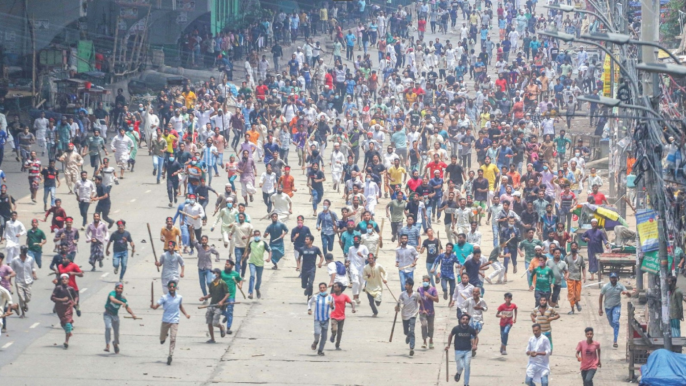
Protesters charge at ruling party activists, who were attacking them, with sticks during a clash in Jatrabari of the capital on 4th August afternoon.
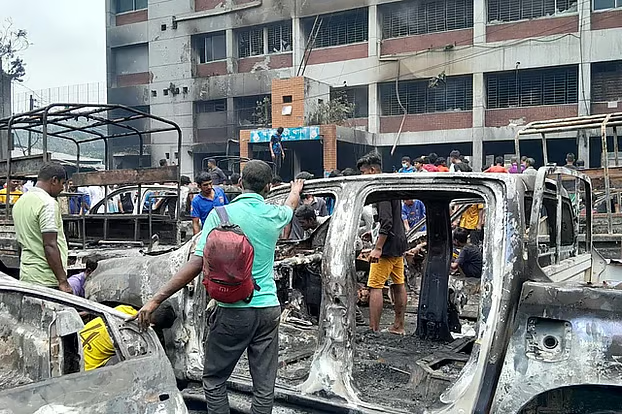
Jatrabari Police Sation, vandalised by protesters.
Ishan notes that the image of the hanging policeman was representative of the rage collectively expressed during the uprising.
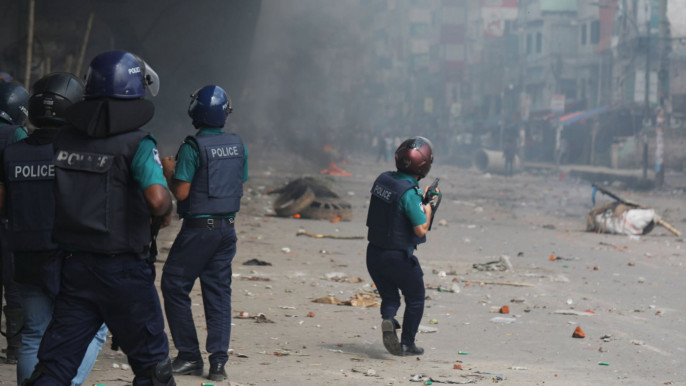
According to a TBS report police fired a total of 305,311 rounds of bullets across Bangladesh, with 95,313 rounds discharged in Dhaka city.
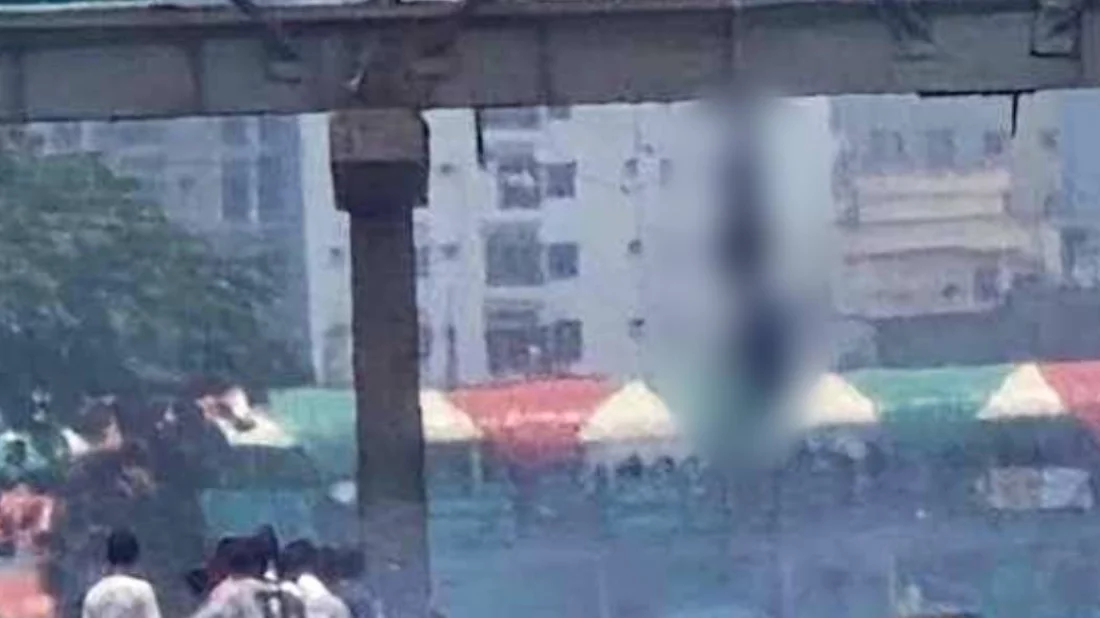
The blurred image is that of a policeman hanged to death on 2nd August.
While women have been sidelined in the aftermath of the uprising, the erasure of queer people who participated in the protests and facilitated community care at the time has been even more stark. We want to conclude this page with interviews from two Hijra and trans persons who share their lived experience of aiding the injured, collecting funds for protesters and dealing with the bodies of deceased protesters during the movement.